Just because we can, does not mean we should.
One of the most devastating things I’ve ever been taught by a mentor is that most horses succeed in spite of their training, not because of it. We were standing together at the end of a long day, watching a young horse graze. She asked me, “What makes this a racehorse?” I thought about it, and went through the list of conformation, breeding, perhaps temperament? “Because her owner said so. Should this horse be a racehorse? Maybe not. She could be a hunter or a trail horse or eat grass in the yard. But she’ll be a racehorse or she’ll be a failure, because her owner says that’s her job. Our job is to make her successful, however we can. That’s training.” Her point was that humans set goals for horses, and then expect them to fulfill them. Our job as trainers was to look at the horse in front of us, and fill in the gaps nature left in conformation and temperament as best we could so that the horse can be a successful as possible at the job her owner had decided she needed to do.
I care a lot more about horses realities than peoples feelings. It’s cost me a lot of paychecks. Not all horses are physically or mentally capable of doing a certain job well. A 17hh TB probably won’t make a great barrel horse; can you barrel race it? Sure, it’s a free country. Will it do the 1D? Not without compensation and sacrifice in it’s body. Can you event the post legged QH? Technically, yes. Should you? Not without breaking her down.
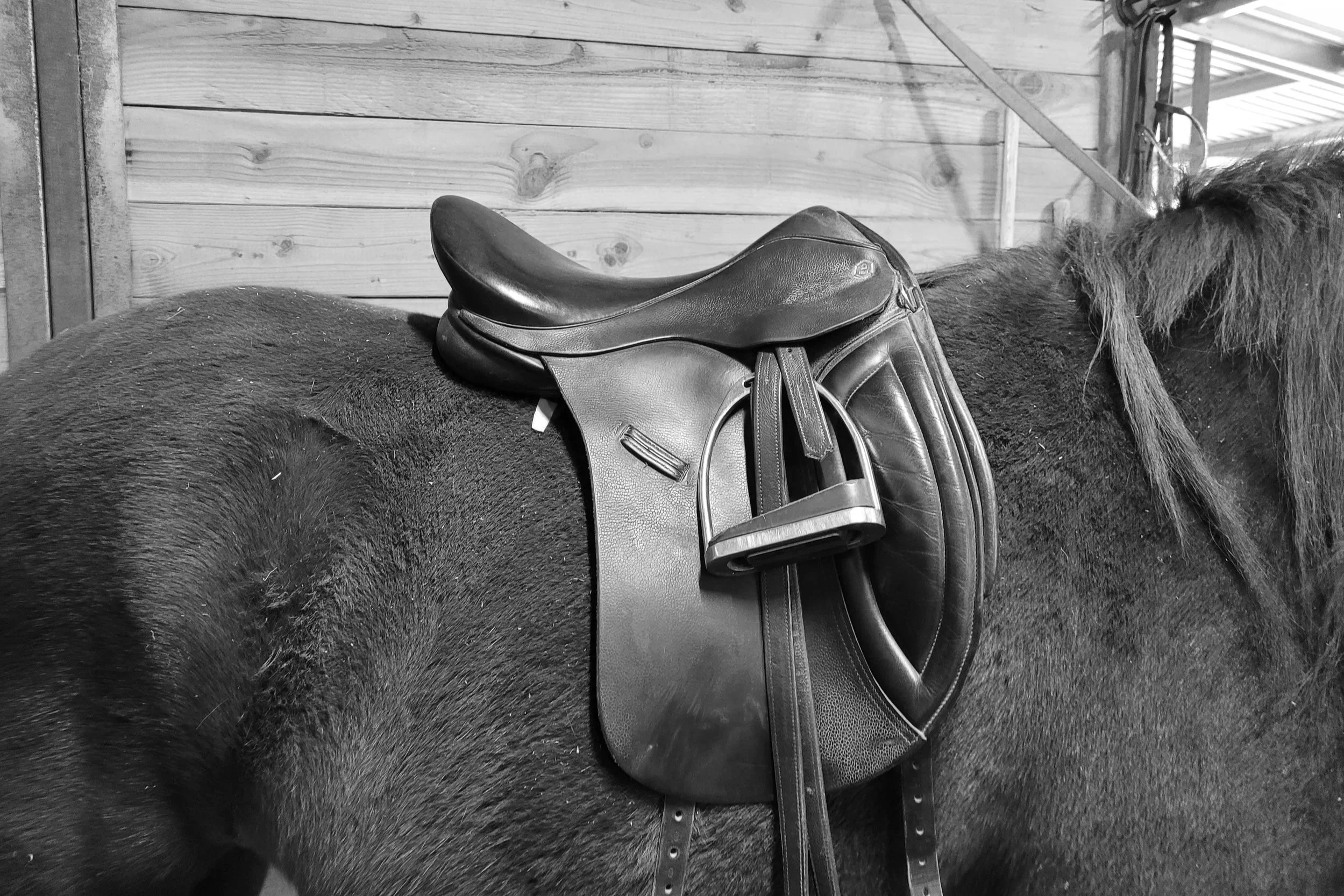
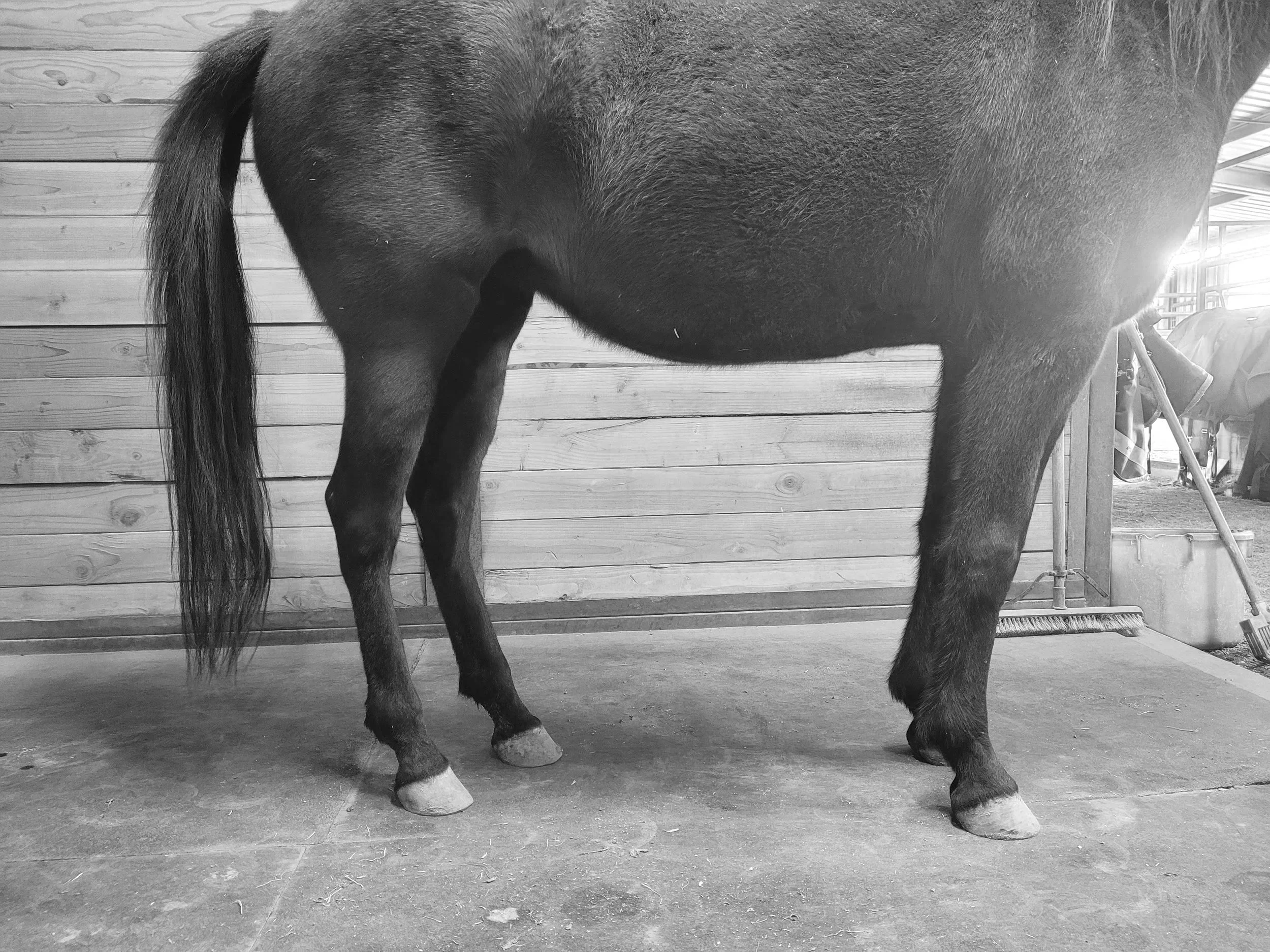
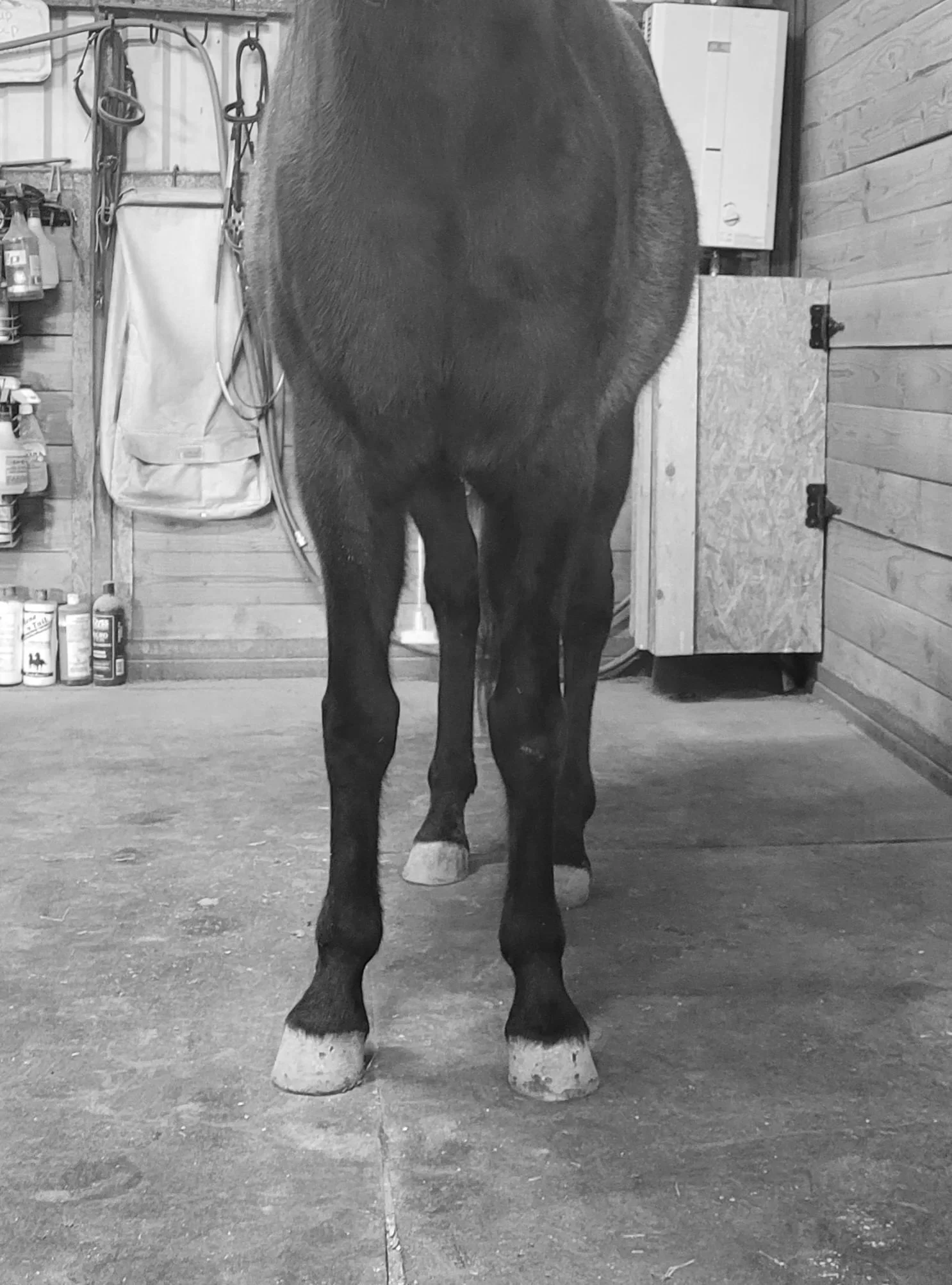
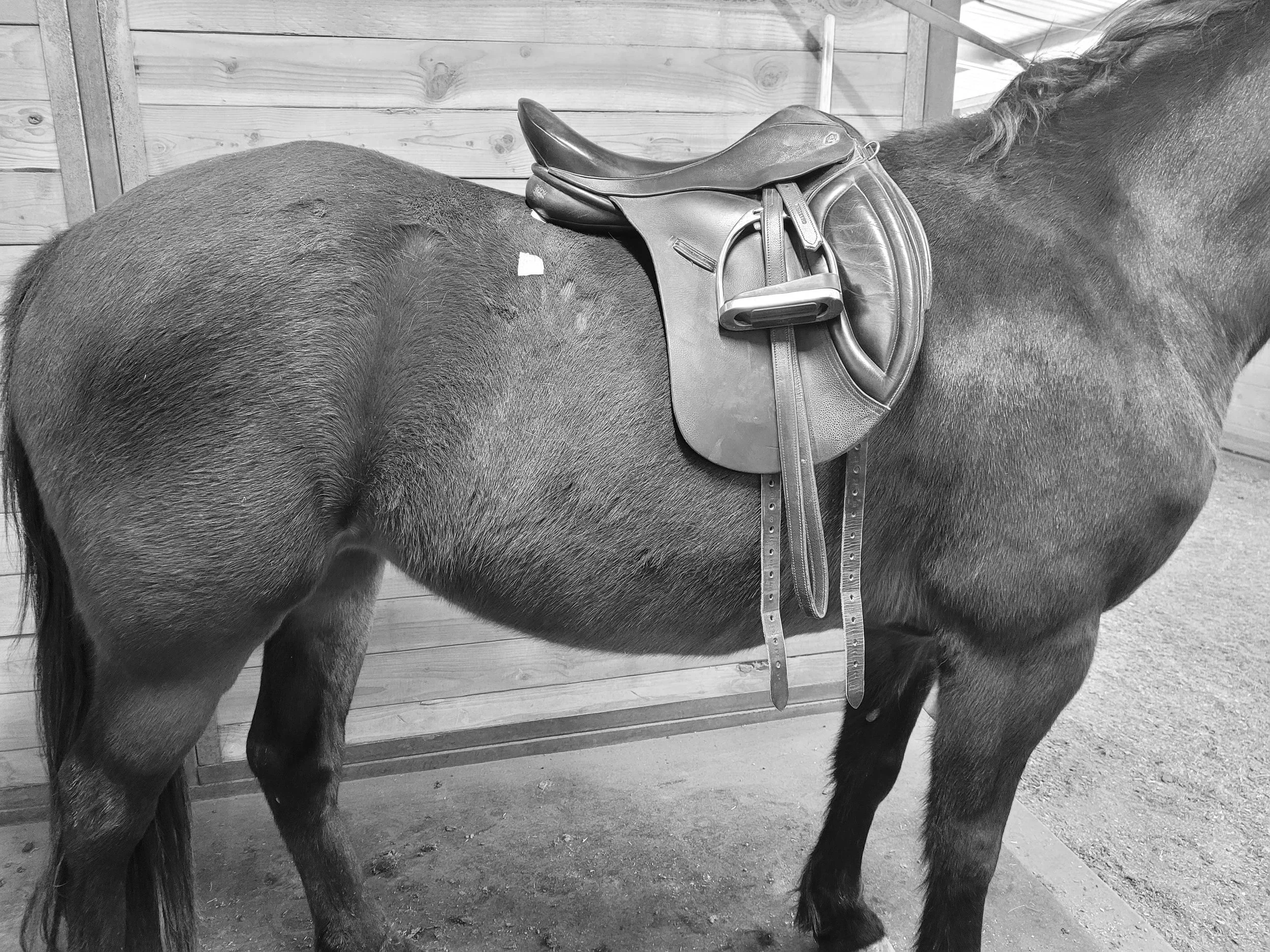
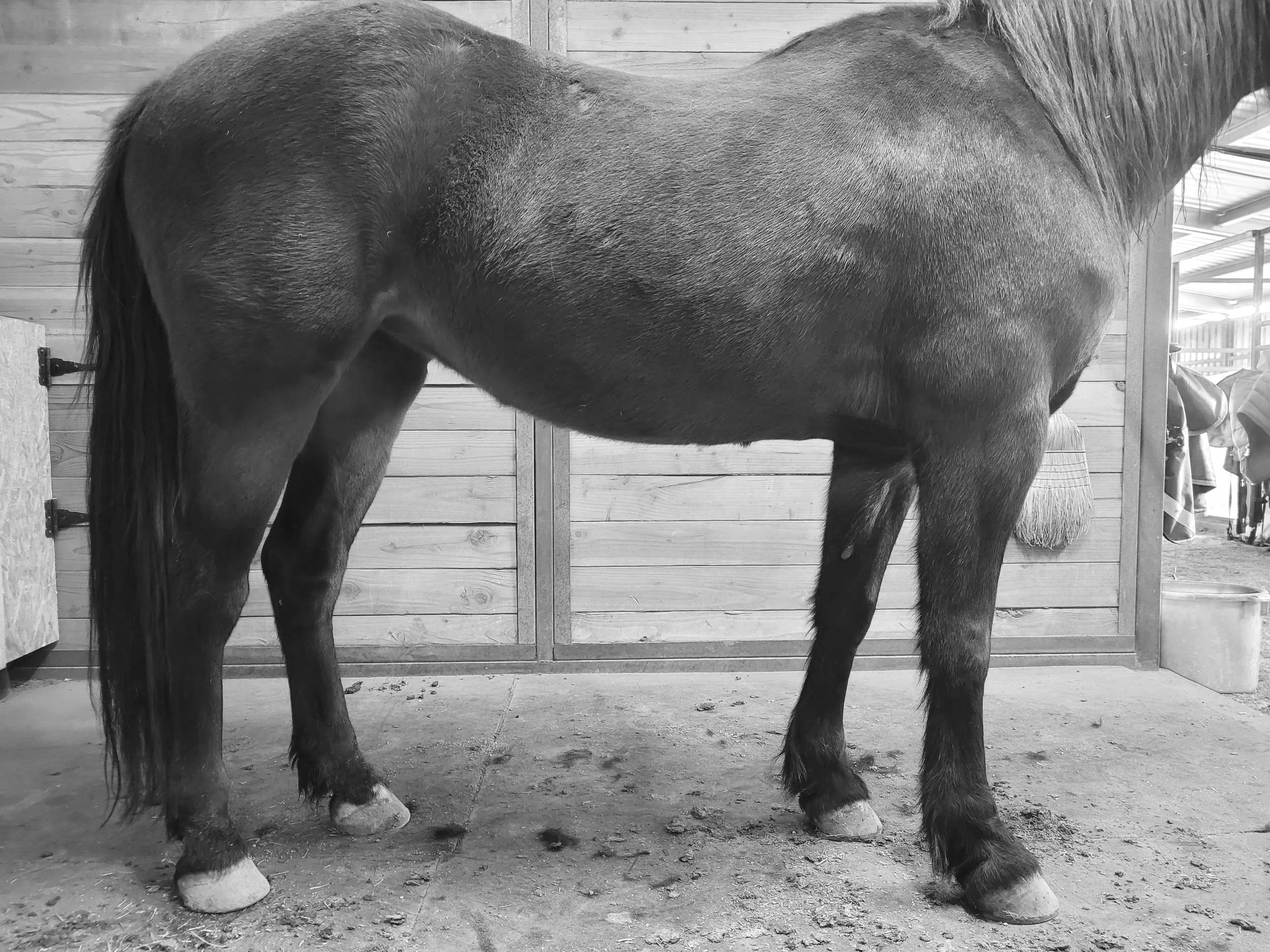
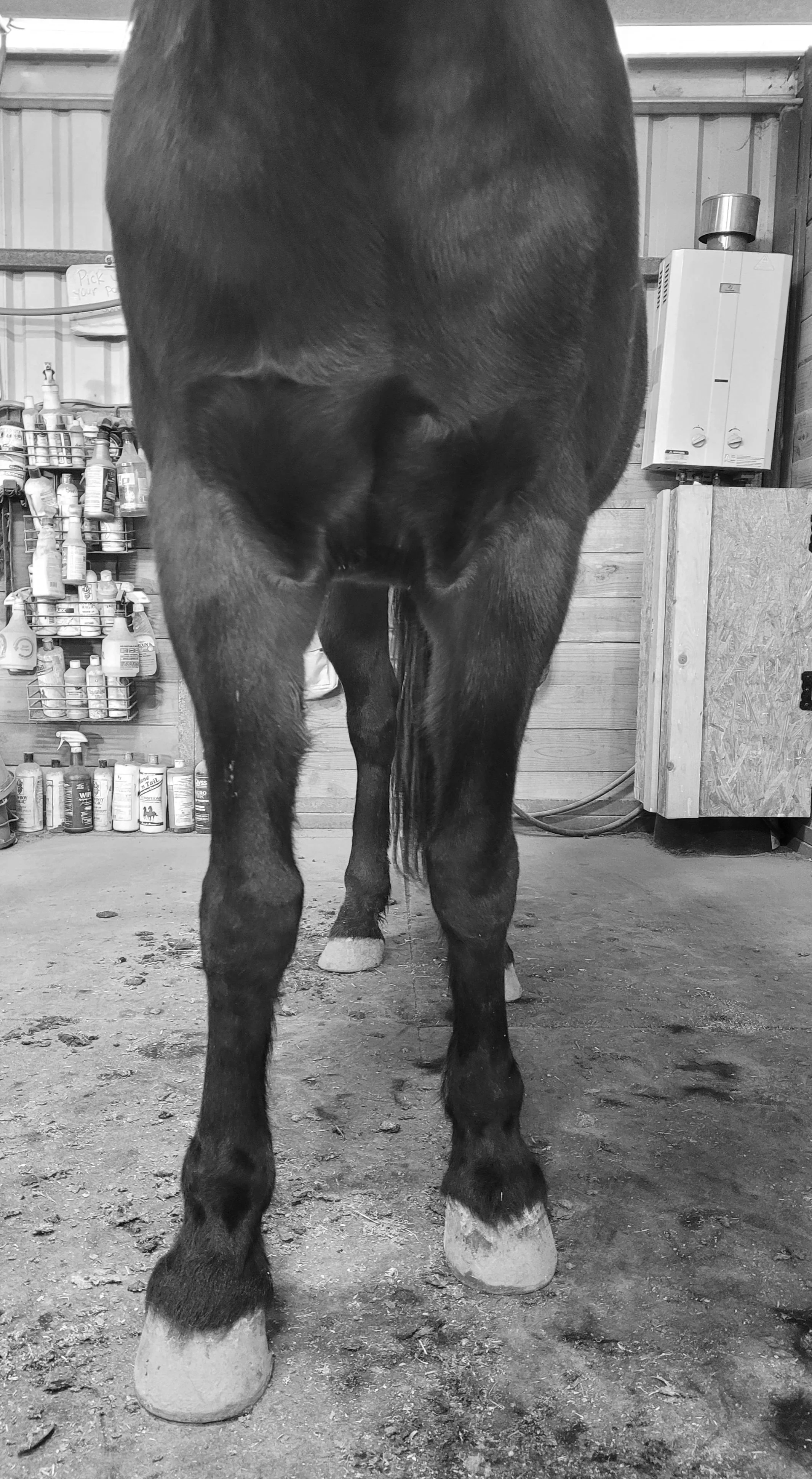
Not all horses are conformed to be ridden. To be a successful riding horse in ANY discipline, horses need some basic conformational markers. They need to have access to their core (topline and thoracic) in order to comfortably carry the weight of the rider. They need hind leg joints that can propel them forward and straight. They need necks that will allow them to balance, and they need a rib cage long enough to support a saddle and rider. The following photos are of a 17 inch all purpose English saddle on two different horses. Both are around 14.2hh, but have very different conformations. One of them I started under saddle and have fit several saddles to, the other I will not.
The first horse moves with pronounced lateral tendencies, rests in a “camped under” stance, has very little functional thoracic development, and a back much too short for a saddles than can fit an adult rider.
The second horse, while not having exemplary conformation or topline, stands comfortably in a stance that is within normal, has some thoracic development, and a rib cage long enough to support a 17 inch saddle.
I suspect the first horse has some underlying congenital issues. I am not a vet, I am a saddle fitter and trainer, so I cannot speculate on what those might be. However, from the corners of knowledge that I am qualified to speak on, this horse does not have the physical attributes for a pain-free and healthy career as a riding horse.
Can you ride her? Sure. It’s a free country. Should you? Her owner thinks so. If she is successful it will be for the reason I stated above; that she succeeds in spite of her training, not because of it. No trainer on earth can give the horse a body she does not have.
Know more, do better.
Quisque iaculis facilisis lacinia. Mauris euismod pellentesque tellus sit amet mollis.